
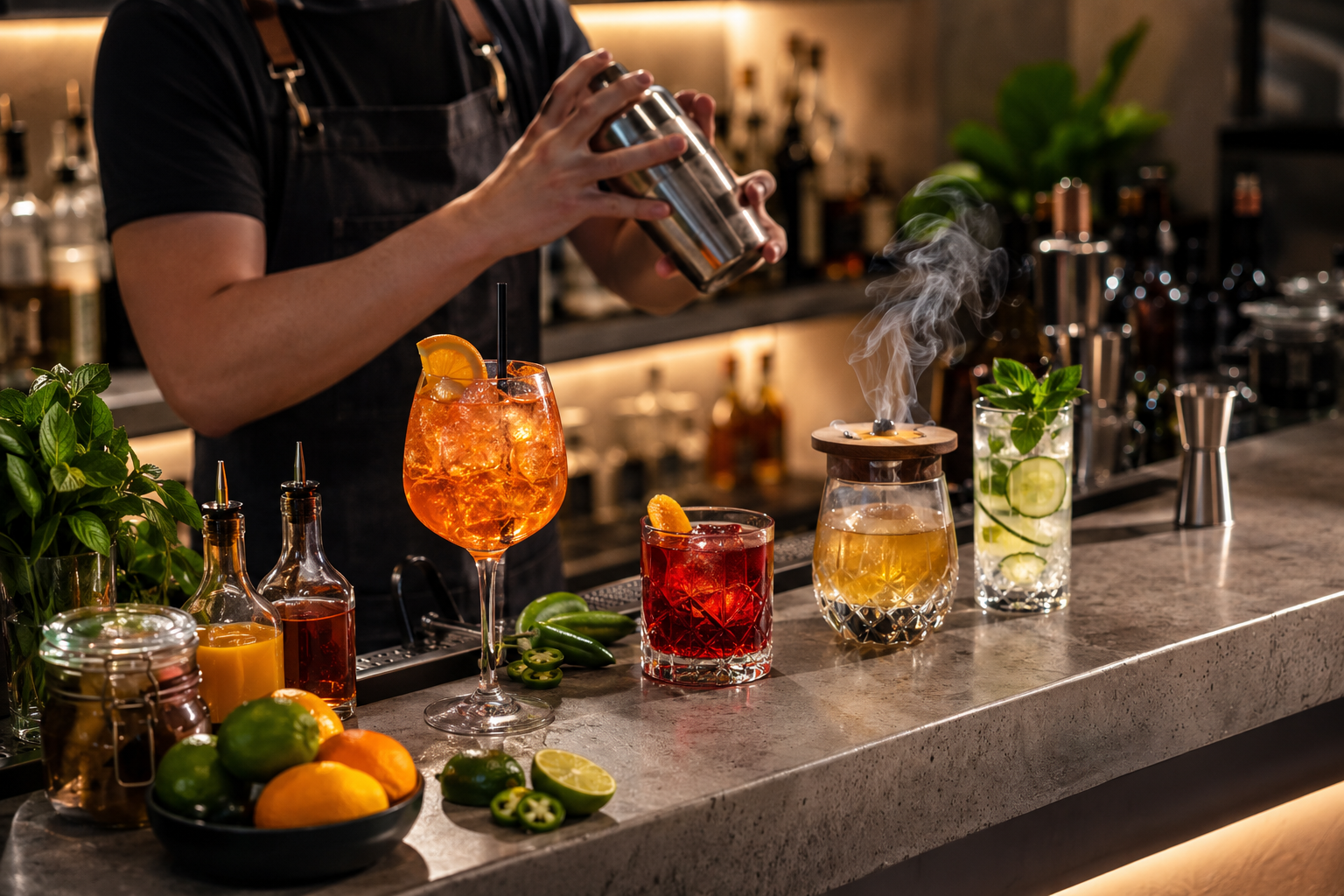
Cocktail Trends Worth Trying at Home in 2026
The cocktail world moves fast. What’s trendy in bars in New York or London reaches home bartenders within months. But not all trends are fleeting gimmicks. Some reflect genuine shifts in how people think about spirits, ingredients, and the experience of drinking.
2026 is shaping up differently than 2025. The focus has shifted from pure indulgence toward intentionality, sustainability, and rediscovery. Home bartenders are embracing exotic spirits, experimenting with fermentation, and rethinking what “low-ABV” actually means. Some of the biggest trends aren’t new, but they’re finally accessible to people making cocktails in their home kitchens.
This guide covers the trends worth paying attention to, why they matter, and how to explore them with the bottles you likely already have or can easily obtain.
Why You’ll Love It
- Discover trending cocktails you can actually make at home
- Understand the “why” behind each trend, not just the what
- Learn which trends match your home bar setup
- Find affordable spirits that are having a moment
- Stay ahead of what’s coming next in cocktail culture
Trend #1: Low-ABV Cocktails (But Not How You Think)
Low-ABV cocktails are having a major moment, but 2026’s version is different from the 2023-2024 wave. It’s not about guilt-free drinking or mocktails. It’s about intentionality, balance, and actually tasting nuance.
The current trend focuses on spirits that are genuinely lower alcohol (around 20-30% ABV instead of 40%) combined with fresh juices, quality modifiers, and minimal dilution. The goal is to create a cocktail you can nurse for an hour without getting hammered, not to eliminate alcohol.
Why It’s Happening: Home bartenders are tired of high-proof cocktails that overpower conversations or require food pairing. Low-ABV drinks let you enjoy more complexity without the intensity. Bars are also responding to consumer demand for more “social drinking” experiences.
Spirits Driving This Trend:
- Vermouth (both dry and sweet, in starring roles, not just modifiers)
- Fortified wines (sherry, Madeira, Marsala)
- Aperitivo spirits (Aperol, Campari, Salers)
- Fruit liqueurs (Chartreuse, Benedictine, Picon)
- Lower-proof gins and rums (35-37% ABV versions)
Try At Home: Start with the Negroni and Americano, both classics that exemplify sophisticated, low-proof drinking. The Negroni Sbagliato (Negroni with Prosecco instead of spirit) is the poster child of this trend. Finish with the Aperol Spritz or Campari Spritz for refreshing, approachable low-ABV options. These drinks taste sophisticated and feel intentional.
Trend #2: Amaro and Bitter Spirits in Leading Roles
Amaro went from “digestif you drink after dinner” to “complex modifier bartenders build around.” Now it’s becoming the star. Home bartenders are buying bottles of Fernet, Cynar, Averna, and regional amaros and building entire cocktails around their unique herbal, bitter, or earthy profiles.
Why It’s Happening: Younger drinkers are exploring bitter flavors as they discover that bitterness is interesting, not unpleasant. The herbal, botanical nature of amaro appeals to people interested in natural ingredients and traditional recipes. Amaros also pair beautifully with spirits at any proof level.
Trending Amaros for Home Bars:
- Fernet-Branca (funky, minty, intense)
- Cynar (artichoke-based, earthy, unique)
- Nonino (refined, approachable, Italian)
- Chartreuse (herbal, complex, versatile)
- Luxardo Amaro Abano (approachable entry point)
Try At Home: Start with our Fernet Con Coca, a simple but brilliant amaro drink that showcases Fernet’s unique minty bite. Then explore the Cynar Julep for an earthy, sophisticated variation. The Amaro Highball is an easy entry point that lets the amaro shine. Mix 1.5oz whiskey or rum with 0.75oz amaro, a dash of bitters, and a citrus twist for a timeless combination.
Trend #3: Mezcal and Agave Spirits Beyond Margaritas
Mezcal has been popular for years, but 2026 is about exploring beyond the standard mezcal margarita. Bartenders and home drinkers are treating mezcal like whiskey: sipping neat, mixing into spirit-forward cocktails, and appreciating regional differences.
Why It’s Happening: Mezcal’s complexity rivals aged spirits twice its price. The smoky, fruity, often floral notes appeal to people exploring terroir and craftsmanship. It’s also finally becoming affordable enough that home bartenders can experiment with multiple styles.
Trending Approaches:
- Mezcal-forward cocktails (mezcal as the star, not balanced with other spirits)
- Mezcal mixed with other agave spirits (tequila + mezcal blends)
- Mezcal with fermented ingredients (see Trend #5)
- Spicy mezcal drinks (jalapeño, habanero, smoked chili)
Try At Home: Skip the standard margarita. Explore our Mezcal Amaro for an interesting spirit-forward option, or try the Mezcal Passion Fruit for a fresher, fruit-driven approach. The Tequila Daisy offers agave spirit sophistication. You can also simply sip quality mezcal neat to understand what all the buzz is about.
Trend #4: Spice, Heat, and Savory Cocktails
Sweet cocktails are cooling off. Spicy, savory, and umami-forward drinks are where the energy is. This includes jalapeño-infused spirits, smoked ingredients, savory bitters, and drinks that lean into heat rather than trying to balance it away.
Why It’s Happening: This trend reflects broader food culture shifts toward bolder, spicier flavors and a rejection of “safe” mixed drinks. Home bartenders are gaining confidence and wanting to experiment beyond traditional templates.
What This Looks Like:
- Spicy infusions (jalapeño vodka, chili-infused spirits)
- Smoked ingredients (smoked salt rims, liquid smoke in cocktails)
- Savory bitters becoming mainstream
- Umami-forward modifiers (soy sauce, miso, fish sauce as cocktail ingredients)
- Sriracha, hot sauce, and chile liqueurs in modern recipes
Try At Home: The easiest entry points are the Spicy Margarita and Spicy Cucumber Margarita for heat-forward drinks. Or add a dash of savory bitters to a classic spirit-forward drink like our Old Fashioned or Manhattan for a sophisticated twist.
Trend #5: Fermentation and DIY Bittering
This is the trend that separates serious home bartenders from casual mixers. People are now fermenting their own shrubs (drinking vinegars), making house bitters, creating infusions, and experimenting with koji and other fermentation techniques. It’s elevated home bartending from “making drinks” to “creating ingredients.”
Why It’s Happening: COVID accelerated home hobbies. Fermentation fits perfectly with the farm-to-table movement and the desire to understand exactly what goes into your drinks. There’s also a fun, experimental element that appeals to people who cook or make other things at home.
Accessible Fermentation for Home Bars:
- Shrubs (fruit + sugar + vinegar, fermented 1-2 weeks)
- House bitters (spirits + botanicals, no fermentation needed, just steeping)
- Infusions (fruit, herbs, spices in spirits, 2-8 weeks)
- Ginger bug (fermented ginger drink, mixer for cocktails)
- Kombucha-based cocktails
Try At Home: Start with a simple shrub. Combine 2 cups fruit (strawberries, raspberries), 2 cups sugar, and 1 cup vinegar. Stir daily for a week, strain, and use in cocktails. Then explore our Gin Sour, Bourbon Sour, or other sour cocktails, which work beautifully with house-made shrub additions. Or make house bitters by steeping dried botanicals (citrus peel, spices, herbs) in high-proof spirit for 2-4 weeks.
Trend #6: Zero-Proof and Conscious Drinking
Unlike the “low-ABV” trend, this one is explicitly about non-alcoholic cocktails. But 2026’s zero-proof trend isn’t about apologetic mocktails. It’s sophisticated non-alcoholic spirits and genuinely complex recipes.
Why It’s Happening: Younger drinkers are embracing sober or sober-curious lifestyles. New brands like Seedlip, Ghia, and others are offering complex, spirit-like products that actually taste interesting. These are no longer just juice cocktails.
What’s New:
- Non-alcoholic spirits with real botanical complexity
- Zero-proof drinks at upscale bars (not seen as compromise)
- Sophisticated non-alcoholic bases (fermented tea, herbal infusions)
- Premium non-alcoholic aperitivos and bitters
Try At Home: Browse our full cocktail recipe database for non-alcoholic inspirations and mocktail ideas. Create complex non-alcoholic cocktails using quality juices, house-made syrups, and bitters. Fresh lemon, ginger, herbal tea, and quality bitters can create genuinely interesting drinks without any alcohol.
Trend #7: Forgotten and Regional Spirits
Bartenders are mining history. Obscure spirits from specific regions, forgotten recipes, and “dead” categories are being rediscovered. Pisco from Peru, genever from the Netherlands, rakia from the Balkans, and other spirits that faded from mainstream cocktail culture are returning.
Why It’s Happening: Two reasons: (1) The internet makes research and sourcing easier. (2) Serious bartenders want authenticity and story. A cocktail made with an obscure 150-year-old spirit tells a better story than one made with a mega-brand.
Spirits Worth Exploring:
- Pisco (Peruvian/Chilean brandy, try in a Pisco Sour)
- Genever (Dutch spirit, gin’s predecessor)
- Rakia (Balkan grape brandy, complex and affordable)
- Rhum agricole (French Caribbean rum, different from typical rum)
- Schnapps (beyond peach and peppermint: digestif versions)
Try At Home: The Pisco Sour is the most accessible entry point and genuinely delicious. It’s a gateway to exploring pisco further. Browse our full recipe database to discover regional spirit cocktails and forgotten recipes worth exploring.
Trend #8: Botanical and Plant-Forward Spirits
The gin renaissance is evolving. Instead of juniper-forward gins, bartenders and home drinkers are seeking gins with unique botanical profiles: floral gins, tea-infused gins, and spirits that prioritize specific botanicals over traditional gin template.
Why It’s Happening: Craft distillers are experimenting. Drinkers are more adventurous. There’s also a natural/organic/plant-forward food culture that extends to spirits. People want to taste the botanicals, not just sense them.
Trending Botanical Approaches:
- Floral gins (rose, lavender, hibiscus)
- Tea-infused spirits
- Smoke and botanical blends
- Locally-sourced botanical spirits
- Spirits focused on single botanicals instead of complex blends
Try At Home: Explore gin-forward cocktails like the Gimlet and Gin Sour that highlight botanical complexity. Try unique options like Gin Mule or Raspberry Gimlet to explore how botanicals play with fruit and spice. You can also infuse your regular gin with dried flowers, tea, or botanicals for custom experiments.
Bartender’s Tips for Exploring These Trends
1. You Don’t Need to Buy Everything You probably already have spirits in your home bar that fit these trends. That vermouth you bought for Martinis? That’s low-ABV trend territory. That amaro someone gave you? Try it as a cocktail base instead of an after-dinner drink. You don’t need a completely new collection to explore trends.
2. Start with One Trend, Not Eight Don’t try to make spicy, fermented, zero-proof amaro cocktails all at once. Pick one trend that matches your curiosity (or your current inventory). Master that, then move to the next. This keeps experimentation fun instead of overwhelming.
3. Search Your Recipe Database for Trend-Aligned Drinks We have 1,080+ cocktails. Many fit into these trends without being labeled as “trendy.” A Negroni is low-ABV. A Daiquiri works with aged rum (forgotten spirits trend). A Spicy Margarita fits the spice trend. Before buying new bottles, explore what your current collection can make in our complete recipe database.
4. Fermentation is Easier Than You Think House shrubs and bitters aren’t alchemy. They’re fruit/botanicals plus liquid, time, and a jar. Your first batch will teach you more than any guide. Start small (one shrub, one bitters recipe) and experiment.
5. Regional Spirits Tell Stories Pisco, genever, rakia: each has history and culture. Learning why these spirits exist, who drinks them, and how they’re made makes the cocktails taste better. Don’t just buy a bottle. Buy a bottle and read about it. That context matters.
Which Trends Match Your Style?
Not every trend is for every drinker. Low-ABV might appeal if you prefer sipping drinks. Fermentation is for experimenters. Spice is for bold palates. Regional spirits are for curious learners.
The beauty of 2026’s cocktail trends is diversity. You can explore authentic international spirits, get nerdy about fermentation, or simply enjoy a beautifully balanced low-ABV vermouth drink. All of these are happening simultaneously, and all are worth trying.
Ready to explore? Check out our complete cocktail recipe database with 1,080+ drinks. Filter by spirit type, search for specific drinks, and find which recipes align with the trends that interest you. Many of our recipes already fit these trends. You might be closer to “on-trend” than you think.
The Bottom Line
Cocktail trends in 2026 are less about gimmicks and more about intentionality. Lower alcohol, more complexity, greater diversity, and emphasis on understanding ingredients and stories. Whether you embrace every trend or pick and choose, the direction is clear: home bartenders are getting more sophisticated, curious, and willing to experiment.
The best trend to follow? The one that excites you. Make cocktails you actually want to drink, with spirits and techniques that make sense for your space and style. That’s not a trend. That’s good bartending.