
Gimlet
 Share
Share
 Tweet
Tweet
 Pin
Pin
Rate This Recipe
Thanks for your rating!
Comments:0
(be the first to comment)

 4.1
4.1
Thank you for your comment.
Once it's approved, it will appear here.
What is Gimlet?
The Gimlet is one of the most historically significant cocktails in maritime history, with a precisely documented origin in the British Royal Navy of the mid-19th century. The drink is widely credited to Sir Thomas Desmond Gimlette, a surgeon in the Royal Navy who served from 1879 to 1913, though similar gin-and-lime combinations existed in naval practice before his formal association with the drink. The cocktail emerged from the British Navy's mandatory daily lime juice ration, which was instituted following the 1867 Merchant Shipping Act to prevent scurvy among sailors on long voyages. The earlier 1747 discovery by James Lind that citrus prevented scurvy had eventually translated into the famous nickname "limey" for British sailors. Naval officers found the daily lime ration unpalatable on its own and began mixing it with gin (also widely available in naval stores) and sugar to make the medicinal dose more drinkable. The standardised Rose's Lime Cordial, launched by Lauchlin Rose in 1867 as the world's first commercially preserved fruit juice, became the traditional sweetener in the classic Gimlet recipe and remained the standard preparation for over a century. The modern fresh-lime-and-simple-syrup version emerged through the craft cocktail revival of the 2000s as bartenders moved away from preserved ingredients toward fresh produce. Raymond Chandler famously immortalised the Gimlet in his 1953 novel The Long Goodbye, where the detective Philip Marlowe declares it "a real Gimlet is half gin and half Rose's Lime Juice and nothing else."
Don't forget to see what other drinks you can make with the ingredients you already have in your bar.
Taste profile
The Gimlet is one of the most balanced and refreshingly dry classic cocktails in the entire gin repertoire, defined by its uncompromising simplicity. Gin leads the palate with its full botanical character: juniper, citrus peel, coriander, and the specific signature of whichever gin is used come through with significantly more clarity than they would in any sweeter or more diluted cocktail. Fresh lime juice provides the sharp citrus acidity that defines the drink as a sour and creates the characteristic tension with the gin's botanicals that makes each sip genuinely refreshing. Simple syrup adds just enough sweetness to balance the lime's tartness without imposing any flavour of its own, allowing the gin and lime to remain the only two flavours the drink actually delivers. The proportions matter significantly: with only three ingredients, every measurement decision directly affects the finished result, which is why the classic recipe is so easy to make poorly when slightly imprecise. The overall flavour is dry, citrus-forward, and aromatically complex, drinking like a more refined and focused alternative to the Gin and Tonic with significantly less sweetness.
Serving suggestions
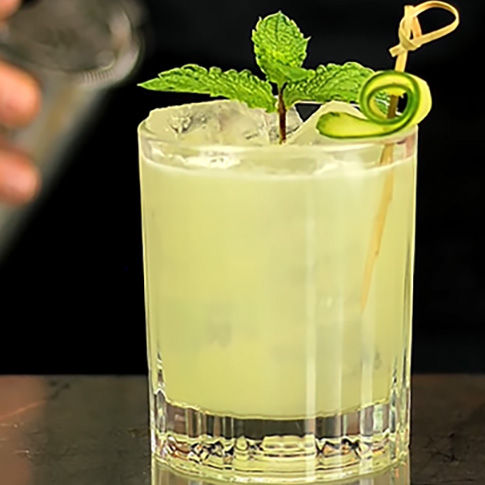
Use a high-quality London dry gin where possible: with only three ingredients, the gin's character defines the finished cocktail more directly than in almost any other drink. Tanqueray, Beefeater, Bombay Sapphire, and Plymouth all work beautifully and produce noticeably different results based on each gin's specific botanical profile. Fresh lime juice is essential rather than bottled: the difference in a three-ingredient cocktail is genuinely significant, and bottled lime juice produces a flat, slightly metallic result that no skilled preparation can fix. For the traditional 19th century-style Gimlet, replace the simple syrup and fresh lime juice with three-quarter ounce of Rose's Lime Cordial: this produces the historically authentic version that Raymond Chandler immortalised in The Long Goodbye, and many cocktail historians consider it the only proper way to serve a Gimlet. Strain into a chilled coupe or martini glass served straight up for the classic presentation, or over a large ice cube in a rocks glass for a slower-drinking variation. A thin lime twist or a single lime wheel makes the only necessary garnish. For a contemporary twist, replace the lime juice with cucumber juice and a small basil leaf in the shaker to create a Cucumber Basil Gimlet, one of the most popular modern variations on the original.
Why You'll Love It?
- Created in the mid-19th century by British Royal Navy surgeon Sir Thomas Gimlette to make the mandatory daily lime juice ration palatable: this is a piece of genuine maritime cocktail history immortalized by Raymond Chandler in The Long Goodbye.
- With only three ingredients, the gin defines everything: choose a quality London dry like Tanqueray, Beefeater, Bombay Sapphire, or Plymouth, and the difference will be immediately noticeable in every sip.
- For the historically authentic version, replace the fresh lime juice and simple syrup with three-quarter ounce of Rose's Lime Cordial: this is the original 19th century preparation that purists consider the only proper Gimlet.
- Fresh lime juice over bottled is non-negotiable in the modern version: in a three-ingredient cocktail the citrus quality directly defines the finished drink, and bottled lime produces a noticeably flatter result.
- For a contemporary variation, swap the lime juice for cucumber juice and add a basil leaf to the shaker: the Cucumber Basil Gimlet is one of the most popular modern interpretations of the classic.
Ingredients for Gimlet
| My Bar | |
|---|---|
| ½ oz lime juice (buy) | ✘ |
| ½ oz simple syrup (buy) | ✘ |
| 2½ oz gin (buy) | ✘ |
| change measure > | |
As an Amazon Associate I earn from qualifying purchases.
Step‑by‑Step Instructions
- Add the gin, lime juice and simple syrup to a shaker with ice and shake until well-chilled
- Strain into a chilled cocktail glass or an rocks glass filled with fresh ice
- Garnish with a lime wheel.