
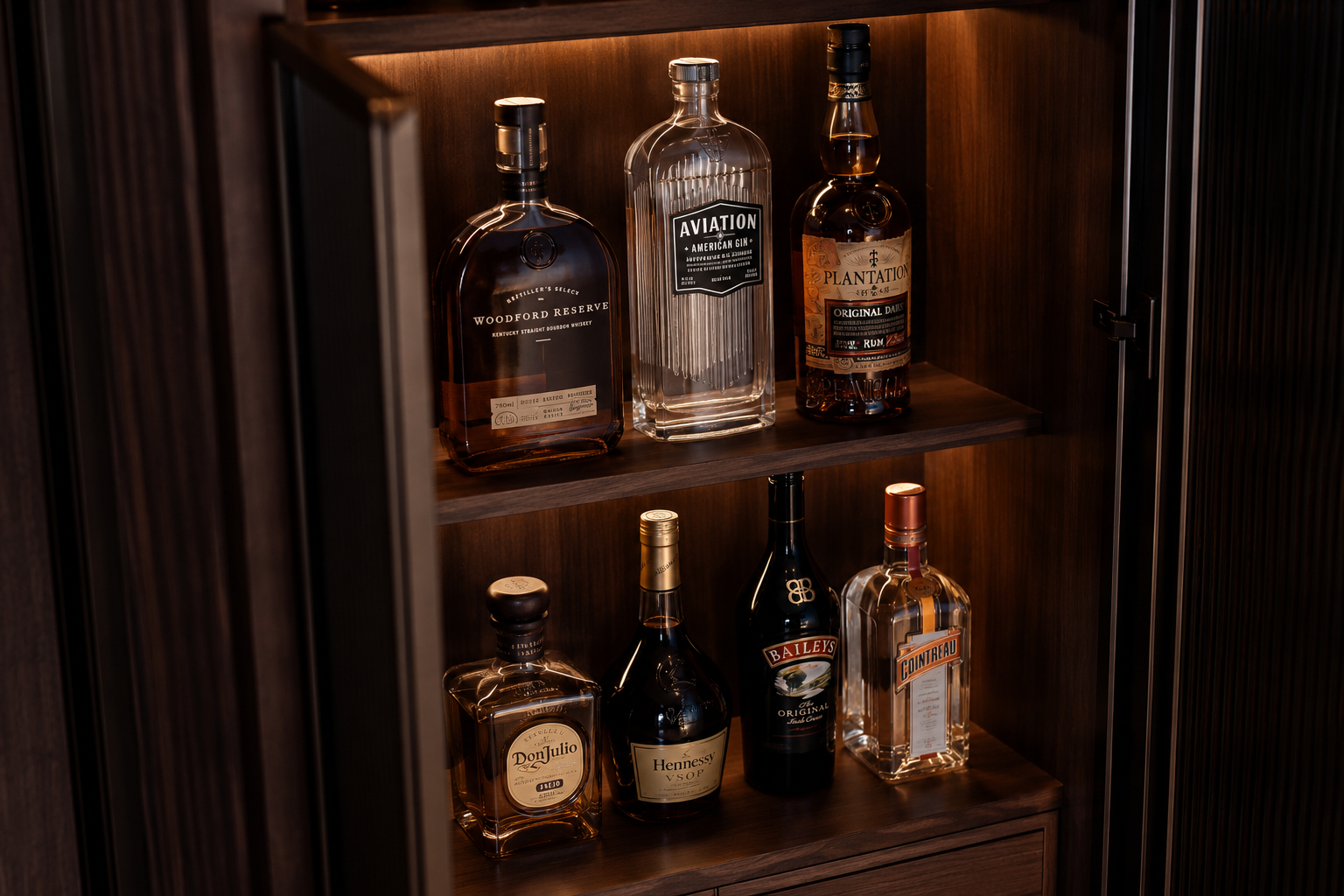
How to Store Spirits: Temperature, Light & Shelf Life Tips
Your collection of spirits is an investment in your home bar. Whether you spent $30 or $300 on a bottle, proper storage is the difference between a spirit that tastes vibrant and complex versus one that tastes flat and oxidized six months later.
Why You’ll Love It
- Keep your premium spirits tasting fresh for years, not months
- Avoid costly mistakes that degrade expensive bottles
- Learn the difference between aging and oxidation
- Discover which spirits last longest and which require more care
- Understand the real shelf life of opened bottles
The Ideal Storage Environment: Temperature is Everything
Temperature is the single most important factor in spirit storage. Spirits don’t have an expiration date like food, but heat accelerates chemical reactions that degrade flavor compounds and alcohol content.
The Sweet Spot: 55-65 degrees Fahrenheit (13-18°C)
This is the temperature range recommended by distilleries worldwide. If you can’t maintain this exact range, don’t worry. Consistency matters more than perfection. A cool room that stays at 70°F year-round is far better than a cabinet that swings from 50°F in winter to 85°F in summer.
Never Store in These Locations:
- Above the stove or near heat sources (kitchen cabinets over appliances are common mistakes)
- On top of the refrigerator (heat radiates upward)
- In direct sunlight, even through closed cabinets
- In garages or attics with extreme temperature fluctuations
- Near windows where UV rays can penetrate glass
- In damp basements prone to humidity swings
Best Storage Locations:
- Interior bar cabinet or closed liquor cabinet in a living room or dining area
- Basement shelving away from direct light (if temperature stays stable)
- Back of a pantry or closet (dark, typically cooler, stable temperature)
- Wine cooler or beverage cooler set to 55-65°F (ideal if you have the space)
Light: UV Rays and Spirit Degradation
Ultraviolet (UV) light triggers photodegradation, the same process that fades your furniture and causes beer to taste “skunky.” Clear and light-colored spirits are more susceptible because UV light penetrates the liquid more easily.
Most Vulnerable to Light Damage:
- Vodka (clear spirits in clear bottles)
- Gin (clear, botanical compounds degrade faster)
- White rum
- Tequila (especially blanco/silver)
- Light-colored liqueurs
More Resistant (Due to Color/Darker Bottles):
- Whiskey and bourbon (amber bottles provide protection)
- Dark rum
- Brandy and cognac
- Scotch (typically dark bottles)
Storage Solution: Always store spirits in a dark cabinet or box. If you love displaying your bottles, use UV-protective glass cabinet doors or keep them in their original packaging inside a cabinet during long-term storage. Even a cardboard box works perfectly for storage you’re not accessing regularly.
Sealed vs. Opened Bottles: Shelf Life Timeline
Once you open a bottle, oxygen begins interacting with the spirit. This is inevitable, but you can slow it dramatically with proper storage.
Unopened Bottles
Most spirits have an indefinite shelf life when unopened and stored properly. Spirits with 40% ABV (80 proof) or higher are too hostile an environment for bacteria to grow. The alcohol itself is the preservative. You can confidently store an unopened bottle for decades.
Exception: Liqueurs with lower alcohol content (15-25% ABV) like cream liqueurs (Baileys), some cordials, and fortified wines should be consumed within 1-2 years of opening, even unopened. Check the label for specific guidance.
Recently Opened Bottles (1-3 months)
In this window, most spirits taste essentially identical to when first opened. A 750ml bottle you’re using for regular cocktails will go through this phase quickly. Storage conditions matter, but you have some flexibility. A bottle on your bar counter will taste fine for 6-8 weeks if you’re making drinks from it regularly.
Moderately Aged Opened Bottles (3-6 months)
This is where proper storage becomes important. Oxidation accelerates noticeably. Delicate spirits (gin, vodka, light rums) may lose brightness. Fuller spirits (whiskey, cognac) remain stable longer. Keep these in a cool, dark cabinet with the cap sealed tightly.
Long-Term Storage (6 months to 2+ years)
Spirits that age well when opened:
- Whiskey: 1-2+ years (actually improves slightly through subtle oxidation)
- Bourbon: 1-2+ years
- Brandy/Cognac: 1-2+ years
- Dark rum: 1-2 years
Spirits with shorter windows:
- Gin: 6-12 months (botanicals fade)
- Vodka: 6-12 months (flavor volatilizes)
- Tequila: 6-12 months (agave notes diminish)
- White rum: 6-12 months
- Liqueurs: Varies by type, typically 6-12 months for quality
Real World Timeline: Most home bartenders use bottles regularly enough that this isn’t a practical concern. If you open a bottle of gin and make one cocktail every 2-3 weeks, it will taste great for a full year even in a kitchen cabinet. The risk only applies to bottles you open and then rarely touch.
How to Tell If a Spirit Has Gone Bad
In rare cases, a spirit can develop off-flavors or become unpleasant. Here’s what to watch for:
Visual Signs:
- Crystallization or sediment (especially in liqueurs)
- Significant color change or darkening
- Cloudiness in clear spirits
Smell and Taste:
- Vinegary or acetone smell (oxidation has proceeded too far)
- Flat, muted flavors with no character
- Off-tastes unrelated to the spirit’s original profile
When in Doubt: Most spirits that seem questionable are simply past their peak, not dangerous. Taste a small sip in a neutral spirit (just a drop on your tongue). If it tastes off, use it for cooking rather than cocktails. If it smells genuinely bad, discard it, but this is extremely rare with high-proof spirits.
Cork and Cap Integrity: The Often Overlooked Detail
Oxidation happens at the seal. A dried-out, cracked, or loose cork or cap is your biggest enemy for long-term storage.
Natural Cork Bottles: Natural cork can dry out over time, especially if stored upright in very dry conditions. Some bartenders store high-end bottles slightly on their side (like wine) to keep the cork moist. However, this is only necessary for bottles you’re keeping 5+ years. For normal use, upright storage is fine.
Synthetic Corks and Plastic Caps: These are durable and maintain better seals. No special handling needed.
If a Cork Dries Out: You can carefully replace it, but this risks contaminating the spirit. A better option is to decant into a smaller bottle with a fresh seal (using a funnel) or simply accept minor oxidation.
Specific Spirit Storage Guide
Whiskey, Bourbon, Rye
These age beautifully when opened. Cool, dark cabinet is ideal, but they’re forgiving. Even a bottle on your shelf (away from direct sunlight) stays excellent for 2+ years. Browse whiskey cocktails to use your collection regularly.
Gin
Store in a cool, dark place. The botanicals are delicate. Use within 12 months of opening for best flavor. Keep sealed tightly between uses.
Vodka
Vodka is among the most neutral and stable spirits. Use within 12 months of opening. Some vodka enthusiasts refrigerate or freeze opened bottles to slow oxidation, which is fine but unnecessary.
Rum (Light/White)
More delicate than dark rum. Consume within 12 months of opening. Store in a cool cabinet.
Rum (Dark/Aged)
Very stable. Can age 2+ years when opened if stored properly. The deeper flavors are more resistant to oxidation.
Tequila/Mezcal
Store upright in a dark cabinet away from heat. Use within 12 months for optimal freshness, though they remain usable longer. The agave-forward flavors fade with extended oxidation.
Brandy/Cognac
Excellent for long-term storage. Can improve slightly with age even after opening. Store in a cool, dark place. Quality brandy can remain excellent for 2+ years.
Liqueurs
Rules vary dramatically by type. Cream liqueurs (Baileys, Frangelico) must be used within 6-8 months of opening. Dry liqueurs (Chartreuse, Benedictine) last 1-2 years. Sweet liqueurs vary: some last indefinitely due to sugar content, others (herbal liqueurs) degrade faster. Check the label or contact the brand for specifics.
Fortified Wines (Vermouth, Sherry, Madeira)
Important: Vermouth, sherry, and similar fortified wines age much faster than spirits due to lower alcohol content (15-20% ABV). Opened vermouth should be refrigerated and used within 1-2 months for cocktails. Store in a cool, dark place or your refrigerator. Sherry and Madeira are more stable but still decline after opening.
Bartender’s Tips for Spirit Storage
1. The Label Check: Always Buy Full Bottles When You Can Spirits in sealed bottles are cheaper per ounce than miniatures or splits. Buy full 750ml bottles of spirits you use regularly (vodka, gin, rum, whiskey). Even if it takes a year to finish, it stays fresher and costs less. Reserve smaller bottles for expensive spirits you’re experimenting with.
2. Create a Dark Display: The Best of Both Worlds Love displaying your bottles? Install a bar cabinet with LED lighting that doesn’t emit UV. LED strip lights are inexpensive, provide visibility, and don’t damage spirits the way incandescent or fluorescent lights do. Keep doors closed on sunny days.
3. Track Opening Dates (For Valuable Bottles) Use a permanent marker to write the opening date on expensive or rare bottles. This takes 5 seconds and removes guesswork months later. For everyday bottles, it’s unnecessary.
4. Transfer Opened Bottles to Smaller Containers for Long Storage If you open a 750ml bottle and only use a few drinks from it, consider transferring the remaining spirit to a 375ml bottle (or smaller). Less headspace means less oxygen. Use a clean funnel and a bottle with an airtight seal. This is worth doing for spirits you’re keeping 6+ months.
5. Never Combine Half-Full Bottles It’s tempting to consolidate two half-full bottles of the same spirit. Don’t. The older bottle has been oxidizing longer. Mixing them wastes the newer bottle. Keep them separate and use the older one first.
The Bottom Line
Perfect spirit storage is simple: cool (55-65°F is ideal, but stable is more important than cold), dark, and sealed. Most home bartenders don’t need to overthink this. A sealed cabinet in your kitchen, dining room, or home bar that stays around room temperature will keep spirits excellent for a year or more after opening. Heat and light are your enemies. Properly stored spirits maintain their character, mixability, and depth far longer than carelessly stored bottles.
Now that you know how to store your collection, explore our complete cocktail recipe database to find the perfect drinks to make with your spirits. The best storage practice is simple: use your bottles regularly.