
Caipirinha
 Share
Share
 Tweet
Tweet
 Pin
Pin
Rate This Recipe
Thanks for your rating!
Comments:0
(be the first to comment)

 4.1
4.1
Thank you for your comment.
Once it's approved, it will appear here.
What is Caipirinha?
The Caipirinha is Brazil's national cocktail and one of the most important drinks in South American cocktail culture, with origins that are disputed but broadly traced to the early 20th century in São Paulo state. The most documented theory places its development in the 1910s and 1920s among rural workers in the sugarcane fields of São Paulo, where cachaça was the most accessible and affordable spirit. The word caipirinha is a diminutive of caipira, a Brazilian Portuguese term for a rural or countryside person, suggesting the drink's working-class agricultural roots before it became Brazil's most recognised cultural export. An alternative origin story credits the drink to a 19th century Spanish flu remedy that combined cachaça with garlic, honey, and lime, with the alcohol and lime eventually evolving into the modern recipe as the medicinal aspects were dropped. Cachaça itself, the drink's defining ingredient, is distilled from fresh sugarcane juice rather than the molasses used to make rum, which gives it a distinctive grassy, slightly funky character that no other spirit replicates. The Caipirinha received international protection in 2003 when the Brazilian government formally registered the name as a geographical indication, requiring authentic Caipirinhas to be made with cachaça rather than substitute spirits. It remains one of the most ordered cocktails in the world and consistently appears in international lists of the most influential drinks of the 20th century.
Taste profile
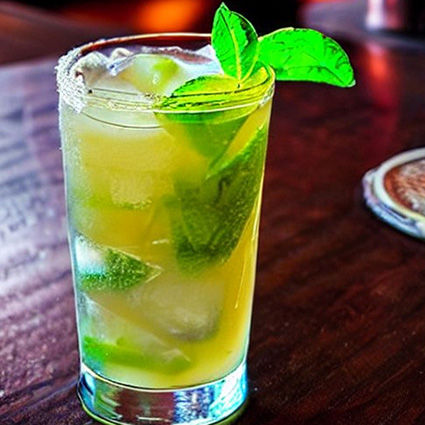
The Caipirinha is bright, tangy, and aromatically complex with a rustic character that distinguishes it cleanly from any rum-based cocktail. Cachaça leads the palate with its distinctive grassy, slightly funky sugarcane character that is earthier and more agricultural than rum, providing a spirit backbone with genuine personality rather than the neutral cleanness of vodka or the molasses depth of rum. Fresh lime juice delivers sharp citrus acidity that defines the drink as a sour, while the muddled lime wedges add a slight bitterness from the pith and rind that gives the Caipirinha a textural and flavour complexity no strained drink could match. Sugar balances the lime's tartness with a sweetness that is particularly distinctive when granulated white sugar is used in the traditional preparation: the partially undissolved sugar grains add a slight textural element to each sip. The combined flavour is bracing, citrus-forward, and unmistakably South American, with a finish that is long, slightly grassy from the cachaça, and refreshingly tart.
Serving suggestions
Do not strain the Caipirinha: pouring everything including the muddled lime wedges directly into the rocks glass with crushed ice is the correct and authentic preparation. The lime pieces in the glass are not an oversight but an integral part of the drink's identity, providing a slow-release flavour element as you drink and contributing to the rustic visual character. Muddle the lime and sugar firmly for a full thirty to forty-five seconds before adding the cachaça: the sugar needs proper time to dissolve into the lime juice, and incomplete dissolution produces a harsh, unbalanced result. Use white granulated sugar rather than simple syrup for the most authentic texture and flavour: the slight graininess and the way the sugar dissolves under muddling is part of the traditional preparation. Crushed ice rather than cubed ice is strongly preferred: it dilutes the drink at the right pace and contributes to the rustic, tropical character. For premium Caipirinhas, look for aged cachaças such as Leblon, Avuá, or Novo Fogo, which offer noticeably more complexity than the basic unaged versions widely available in bars. The drink batches poorly due to the muddled lime: build each glass individually to order.
Why You'll Love It?
- Cachaça rather than rum is the ingredient that makes this distinctively Brazilian: its grassy, funky sugarcane character is what no rum substitute can replicate, and the difference is immediately noticeable in every sip.
- Do not strain the drink: the muddled lime wedges in the glass are part of the authentic preparation and provide a slow-release flavour as the drink is consumed rather than being a presentation accident.
- Use white granulated sugar rather than simple syrup: the slight graininess and the way the sugar dissolves under muddling is part of the traditional preparation and contributes to the drink's distinctive texture.
- Crushed ice over cubed ice produces a noticeably better result: it dilutes the drink at the correct pace and contributes to the rustic, tropical character that defines the Caipirinha.
- Brazil's national cocktail, internationally protected by geographical indication law, and one of the most influential drinks of the 20th century: this is genuinely important cocktail history that takes three minutes to make at home.
Ingredients for Caipirinha
| My Bar | |
|---|---|
| ½ oz lime juice (buy) | ✘ |
| ½ oz simple syrup (buy) | ✘ |
| 1 sliced lime | ✘ |
| 2 oz cachaca | ✘ |
| change measure > | |
As an Amazon Associate I earn from qualifying purchases.
Step‑by‑Step Instructions
- In a glass using a muddler gently crush lime with simple syrup.
- Add the cachaca and lime juice and stir.
- Add crushed ice and garnish with a lime slice.