
Gin Sonic
 Share
Share
 Tweet
Tweet
 Pin
Pin
Rate This Recipe
Thanks for your rating!
Comments:0
(be the first to comment)

 4.1
4.1
Thank you for your comment.
Once it's approved, it will appear here.
What is Gin Sonic?
The Gin Sonic is a contemporary variation of the Gin and Tonic, the iconic British cocktail that traces its origins to the 19th century when British colonial officers in India mixed quinine-rich tonic water with gin to make their daily anti-malaria dose more palatable. The Gin and Tonic itself became one of the defining drinks of British colonial culture and eventually one of the most ordered cocktails in the world. The Gin Sonic refines that template by replacing half of the tonic water with club soda or sparkling water, which produces a noticeably drier, less sweet result that allows the gin's botanical character to come through more clearly. The drink was popularised through the modern craft cocktail movement of the 2010s as bartenders increasingly sought ways to highlight premium gins without burying their complexity under heavy tonic syrup. The "Sonic" name simply refers to the half-tonic, half-soda combination, with no specific bartender or location credited as the originator. The Gin Sonic has become particularly popular among gin enthusiasts and craft cocktail bars as the preferred way to serve high-end botanical and contemporary-style gins where preserving the spirit's character matters more than masking it with sweetness.
Unlike heavier mixed drinks, the Gin Sonic stays lively from first sip to last thanks to the sparkling soda water balancing the quinine bite of tonic. It pairs beautifully with sushi nights, grilled seafood, salty snacks, or simply collapsing onto the patio after a long day. Fans of classic gin cocktails may also enjoy the Gin Rickey.
Don't forget to see what other drinks you can make with the ingredients you already have in your bar.
Taste profile
The Gin Sonic is crisp, dry, and noticeably more botanical than a standard Gin and Tonic, with a balance that genuinely showcases the gin rather than disguising it. Gin leads the palate clearly: juniper, citrus, and the specific botanical signature of whichever gin is used come through with significantly more clarity than they would in a tonic-heavy version. Tonic water provides the characteristic quinine bitterness and a measured sweetness that frames the botanicals, while club soda dilutes the tonic's intensity and contributes a clean, neutral effervescence that lifts the entire drink without adding any flavour competition. The 50:50 ratio of tonic to soda is the defining structural choice and what gives the Gin Sonic its identity: too much tonic and it becomes a standard Gin and Tonic, too much soda and the bitter tonic character disappears entirely. The overall flavour is dry, aromatic, and refreshingly clean with a long finish that lets the gin's botanicals linger noticeably longer than a tonic-heavy version would allow.
Serving suggestions
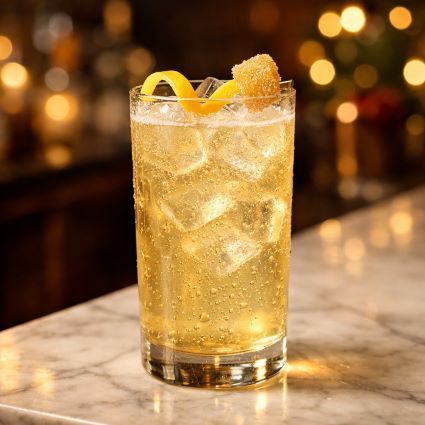
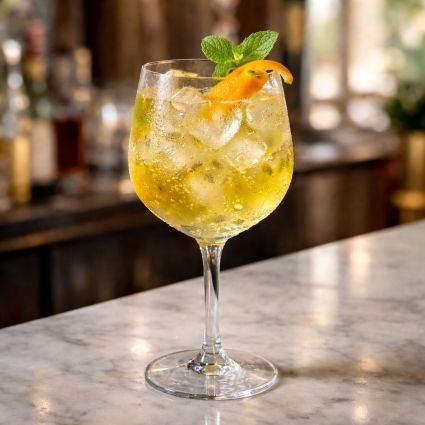
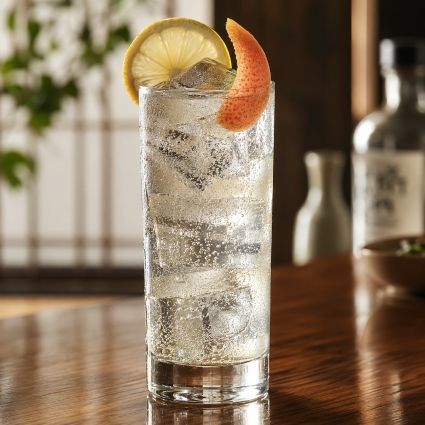
Use a high-quality London dry gin where possible: the Gin Sonic format specifically rewards premium gins because the lighter tonic-to-soda ratio allows the spirit's character to come through clearly. Tanqueray, Beefeater, Bombay Sapphire, or Hendrick's all work beautifully, with each producing a noticeably different result based on the gin's specific botanical profile. The garnish makes a meaningful difference here. A lemon wheel is the standard choice and pairs naturally with most London dry gins, while a grapefruit twist pairs particularly well with contemporary or floral gins like Hendrick's. A fresh thyme or rosemary sprig adds an aromatic complexity on the nose that elevates the drink considerably and signals craft preparation. Use a tall highball glass or a large balloon wine glass: the wider bowl allows the gin's botanical aromas to develop more fully and is the traditional Spanish gin and tonic glassware that has influenced modern gin service worldwide. Build directly over plenty of fresh ice rather than shaking, and add the tonic and soda last poured slowly down the side of the glass to preserve carbonation. Use premium tonic water like Fever-Tree, Q, or Three Cents: the difference between premium and generic tonic is significantly more noticeable in a Gin Sonic than in a standard Gin and Tonic.
Why You'll Love It?
- The 50:50 tonic-to-soda ratio is the entire point of the Gin Sonic: it lets the gin's botanical character come through more clearly than a tonic-heavy version while preserving the quinine bitterness that makes the format work.
- This is the format craft cocktail bars use specifically to showcase premium gins: the lighter tonic intensity rewards quality spirits in a way that no standard Gin and Tonic can match.
- Premium tonic water like Fever-Tree or Q makes a noticeably bigger difference here than in a standard Gin and Tonic: the lighter ratio means tonic quality is exposed rather than masked.
- A grapefruit twist with contemporary gins like Hendrick's, or a lemon wheel with London dry styles like Tanqueray: the garnish is genuinely worth choosing carefully to match the spirit's botanical profile.
- Three ingredients, two minutes, zero technique: this is genuinely the simplest way to elevate a standard Gin and Tonic into something more sophisticated without changing your home bar setup.
Ingredients for Gin Sonic
| My Bar | |
|---|---|
| 2 oz soda water (buy) | ✘ |
| 2 oz tonic water (buy) | ✘ |
| 2 oz london dry gin | ✘ |
| change measure > | |
As an Amazon Associate I earn from qualifying purchases.
Step‑by‑Step Instructions
- In a highball glass with fresh ice cubes pour in the gin.
- Add tonic water and soda water in equal parts.
- Stir gently to preserve carbonation and garnish with a lemon wheel or grapefruit peel.